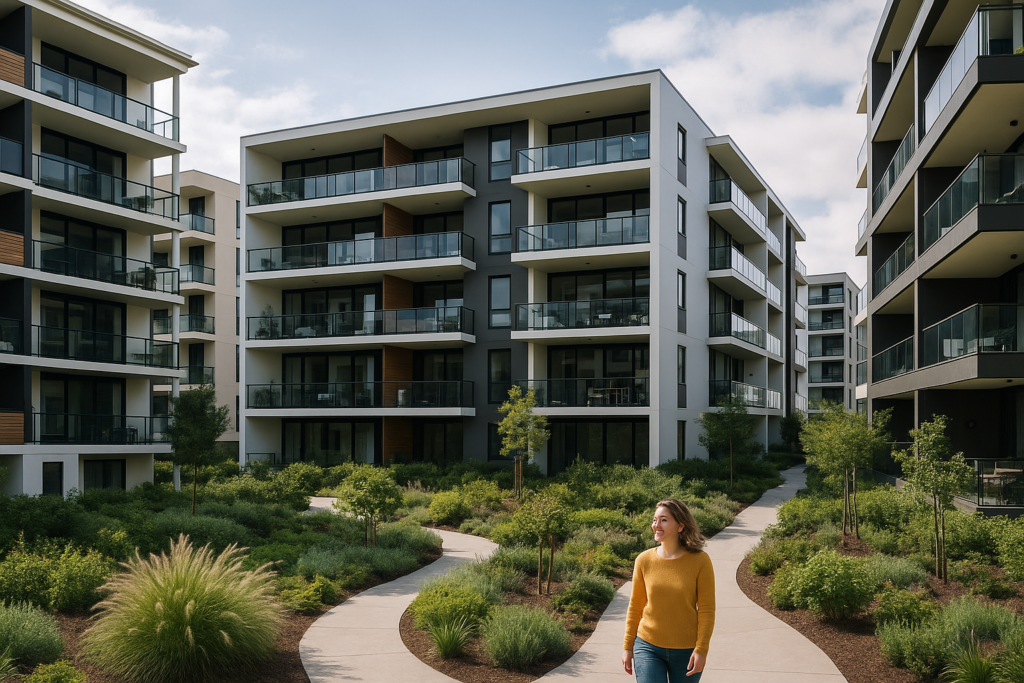
Author name: Mizan Design Studio

Procurement

What is tender and contract administration?

Look, I’ve been in this business long enough to see projects go sideways because nobody knew who was supposed to do what. Or worse… watching a client get taken for a ride because they didn’t have proper contract administration in place. **So what exactly is tender and contract administration?** Think of it like this. You wouldn’t buy a car without test driving it first, right? And you definitely wouldn’t hand over the cash without some paperwork protecting you. That’s essentially what we’re talking about here. ## The Tender Part Okay so tendering is basically the process where you get builders to compete for your project. It’s like… getting three quotes for fixing your roof, except way more detailed. Here’s what happens: – We prepare all the documentation (plans, specs, the whole nine yards) – Send it out to qualified builders – They come back with their best price – We help you compare apples to apples – You pick the best one Now here’s where people mess up. They just go with the cheapest price. Big mistake. **Huge**. Sometimes the lowest bidder forgot to include something. Or they’re planning to hit you with variations later. We’ve seen it a hundred times. ## The Contract Admin Side This is where the rubber meets the road. Once you’ve picked your builder, someone needs to make sure they actually do what they promised. Contract administration means: – Making sure the builder sticks to the plans – Checking their progress claims (are they asking for money for work they’ve actually done?) – Dealing with any changes that come up – Being the referee when there’s a dispute – Making sure quality standards are met I can’t tell you how many times I’ve seen projects where nobody was doing this properly. Builder says one thing, client remembers another, and suddenly you’re in a mess. ## Why You Actually Need This **Protection.** Plain and simple. Last month I saw a project where the client tried to manage everything themselves. The builder claimed they’d completed work they hadn’t even started. Without proper documentation and someone checking? Good luck proving otherwise. But when you have proper tender and contract administration: – You get competitive pricing – Everything’s documented – Someone’s watching your back – Disputes get resolved before they become lawsuits – Your project actually gets finished properly ## How It Really Works Let me break down what actually happens when you engage someone like Mizan Design Studio for this… First, they don’t just send out your plans to any random builder with a ute and an ABN. They know who the good ones are. Who delivers on time. Who doesn’t cut corners. During construction, they’re checking the work. Not just “yeah that wall looks straight” but actually measuring, testing, making sure it matches what was promised. And when (not if, when) something unexpected comes up? They handle it. Maybe the builder hits rock where there shouldn’t be rock. Or council throws a curveball. Someone needs to sort it out without the whole project grinding to a halt. ## The Bottom Line You know what? You could probably manage without tender and contract administration. Just like you could probably represent yourself in court. But why would you? This stuff is complex. There’s standards to meet, regulations to follow, contracts to interpret. One mistake can cost you thousands. Or tens of thousands. Having professionals handle your tender and contract administration isn’t an expense. It’s insurance. It’s peace of mind. It’s making sure your dream home or development actually becomes reality instead of a nightmare. And honestly? In Sydney’s construction market right now, with material costs bouncing around and good builders booked solid… you need every advantage you can get. That’s what proper tender and contract administration gives you. An advantage. Protection. And someone in your corner who knows what they’re doing. Because at the end of the day, you want your project finished on time, on budget, and done right. Don’t you?
Residential Design

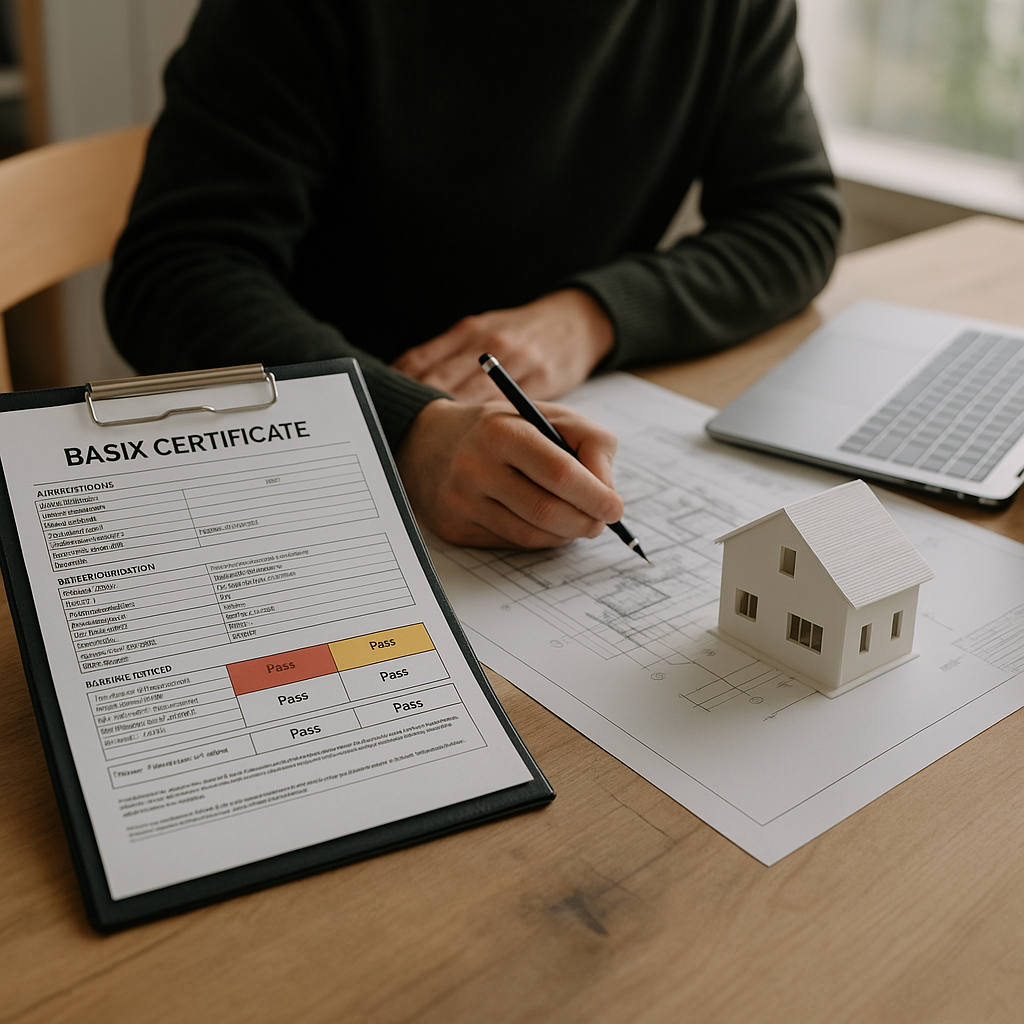
How do BASIX certificates work in building design?

Look, if you’re building anything in NSW these days… you’re gonna need a BASIX certificate. And honestly? Most people have no clue what it actually is until they’re knee-deep in building plans. ## **What Even Is a BASIX Certificate?** Okay so BASIX stands for Building Sustainability Index. Fancy name, right? But here’s what it really means – it’s basically the government’s way of making sure your new home, duplex, or whatever you’re building isn’t gonna waste water and energy like crazy. Think of it like this. You know how cars have fuel efficiency ratings? BASIX is kinda like that but for buildings. Except you can’t build without it. ## **When Do You Actually Need One?** Here’s the deal: – Building a new home? **You need BASIX** – Adding a granny flat? **Yep, BASIX** – Major renovation that’s costing more than $50,000? **BASIX again** – Building duplexes or multi-residential stuff? **Definitely BASIX** Basically if you’re doing anything more serious than painting walls… you probably need one. ## **How Does This Thing Actually Work?** So here’s where it gets interesting (and by interesting I mean slightly annoying but necessary). First, you gotta jump online to the BASIX website. Then you – or more likely your designer – fills out this assessment that asks about: – **Your building design** – like which way it faces, how big the windows are – **Water stuff** – what taps you’re using, if you’re getting a rainwater tank – **Energy things** – insulation, what kind of hot water system, air con details The system then crunches all this info and tells you if your design passes or fails. If it fails? Back to the drawing board. Literally. ## **The Targets You Gotta Hit** NSW government isn’t messing around. They’ve got specific targets: – **Water**: Usually need to reduce usage by 40% – **Energy**: Gotta beat the average home by 25-50% – **Thermal Comfort**: Your home needs to stay comfy without blasting the AC 24/7 And no, you can’t just promise to take shorter showers. It’s all about the design and fixtures. ## **What Happens If Your Design Doesn’t Pass?** Honest truth? This happens more than you’d think. First designs often fail because people don’t realize how strict the requirements are. But don’t panic. Your designer (if they know what they’re doing) will tweak things like: – Adding better insulation – Switching to more efficient appliances – Maybe suggesting a rainwater tank – Adjusting window sizes or adding shading Sometimes it’s tiny changes. Sometimes… it’s bigger ones. ## **The Certificate Itself** Once you pass, you get this PDF certificate with a unique number. Guard this thing with your life because: 1. **You need it for your DA or CDC application** 2. **Council won’t even look at your plans without it** 3. **Your builder needs to follow everything on it** And here’s the kicker – the commitments on your BASIX certificate? They’re legally binding. So if it says you need 3-star taps, you can’t cheap out and get 2-star ones later. ## **Common Mistakes People Make** I’ve seen this happen so many times: – **Changing the design after getting BASIX** – Nope, gotta redo it – **Thinking it’s just paperwork** – It’s not, it affects your actual build – **Leaving it til the last minute** – Bad move, it can delay everything – **Not budgeting for BASIX requirements** – Those water tanks aren’t free ## **Why This Actually Matters** Look, I get it. More regulations, more hoops to jump through. But here’s the thing – homes designed to meet BASIX standards? They’re actually way better to live in. Lower energy bills, more comfortable temperatures, less water usage… it adds up. Plus you’re doing your bit for the environment which, you know, is kinda important these days. ## **Getting It Right First Time** My advice? Work with designers who know BASIX inside out. They’ll design with these requirements in mind from day one instead of scrambling to fix things later. Trust me, it’s way less stressful. And be upfront about your budget. Some BASIX solutions cost more upfront (like solar hot water) but save money long-term. Others are pretty cheap but super effective. ## **The Bottom Line** BASIX certificates aren’t going anywhere. They’re part of building in NSW now, whether we like it or not. But honestly? Once you understand how they work, they’re not that scary. Just another step in the process. The key is planning for it early, working with people who get it, and remembering that those requirements? They’re actually making your future home better. Sure it’s a bit of extra work now. But when you’re sitting in your energy-efficient, comfortable home with reasonable utility bills? You’ll be glad you did it properly. *Need help navigating the BASIX process? That’s exactly what good building designers do every day. Just saying.*

Building Permits

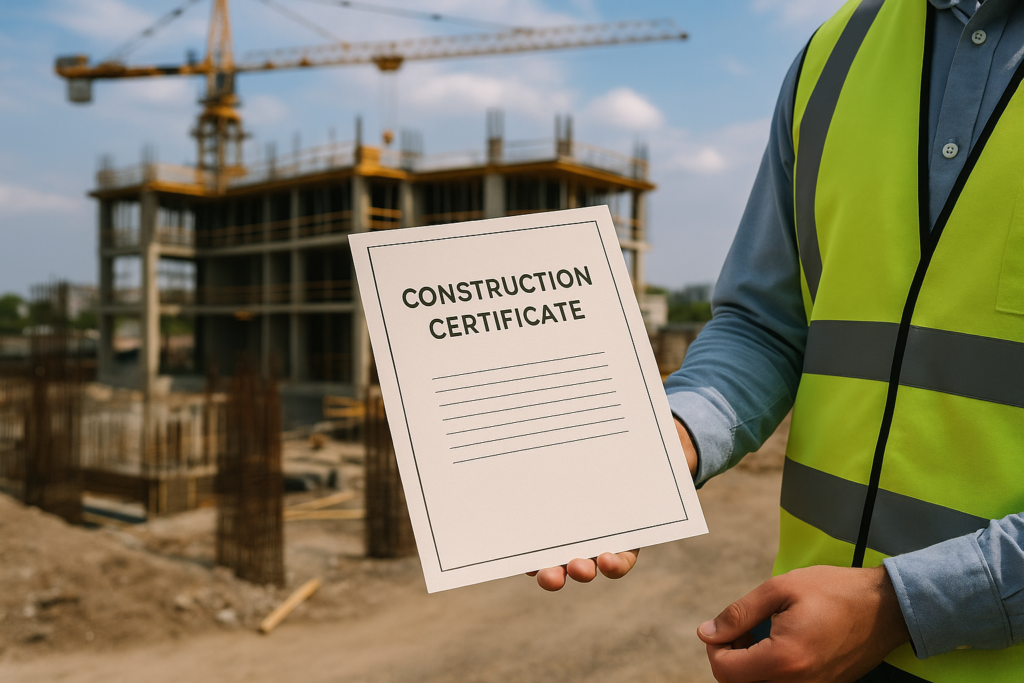
What is a construction certificate (CC)?

Look, I’ve been in construction long enough to know that the paperwork side of building can make your head spin. And if there’s one document that confuses the hell out of people, it’s the Construction Certificate. Or CC as we call it. So let me break it down for you… ## **What Actually IS a Construction Certificate?** Think of a CC as your golden ticket to start building. Seriously. You can’t legally pick up a hammer without one. It’s basically the government’s way of saying “yeah okay, your building plans look legit and won’t fall down”. The council or a private certifier checks that your detailed construction drawings tick all the boxes – building codes, safety standards, the whole nine yards. ## **Here’s What People Get Wrong** A lot of folks think once they get their DA (Development Approval) they’re good to go. Nope. That’s like getting permission to throw a party but not actually being allowed to set up the speakers yet. The DA says “yes you can build this thing here”. The CC says “yes, and here’s exactly HOW you’re gonna build it safely”. ## **What Gets Checked in Your CC Application?** When you submit for a CC, they’re looking at: – **Structural drawings** – will your building actually stand up? – **Fire safety measures** – can people get out if things go south? – **Electrical and plumbing plans** – no dodgy wiring please – **Energy efficiency stuff** – your BASIX certificate needs to be sorted – **Access requirements** – making sure everyone can use the building And about 50 other things that’ll make your eyes glaze over. Trust me. ## **The Timeline Reality Check** Here’s what nobody tells you – getting a CC isn’t quick. If your drawings are perfect (spoiler: they never are first go), you’re looking at maybe 2-3 weeks. But realistically? Budget for 4-6 weeks. Why? Because there’s always something. Maybe your engineer forgot to sign page 47. Or the fire report is missing a detail. Or Mercury is in retrograde. Who knows. ## **The Cost Nobody Mentions** Everyone asks about DA costs but forgets the CC has its own price tag. You’re looking at: – **Council or certifier fees** – usually $1,000-3,000 depending on the project – **Any extra reports needed** – fire safety, acoustic, whatever they ask for – **Your designer’s time** to prepare all the documentation It adds up. Fast. ## **My Advice? Get Help** Look, I’ve seen too many people try to DIY their CC application to save a few bucks. Then they spend months going back and forth with council because they missed something. Find yourself a good building designer or architect who knows the local council’s quirks. Someone who’s done this dance before. Because every council has their own special way they want things done, and fighting that is like… well, fighting city hall. The team at Mizan Design Studio deals with CCs all the time. They know what councils want to see, what reports you’ll need, and most importantly – what mistakes to avoid. They handle everything from the initial design right through to getting that CC in your hands. ## **Bottom Line** A Construction Certificate isn’t just red tape. It’s what makes sure your dream home doesn’t become a nightmare. It’s the difference between a building that lasts 50 years and one that… doesn’t. Yes it’s a pain. Yes it costs money. But trying to build without one? That’s a whole different level of expensive when council shuts you down. Take it from someone who’s been around the block – do it right the first time. Your future self will thank you. *Want to chat about your CC needs? The crew at Mizan Design Studio know their stuff. They’ll walk you through the whole process without the jargon.*

Urban Planning

What do you need for planning approvals?

Look, I’ve been in this game for a while now. And if there’s one thing that drives people absolutely mental, it’s planning approvals. You know the feeling. You’ve got this brilliant idea for your property – maybe a granny flat for the in-laws, or finally building that dream home you’ve been sketching on napkins for years. Then someone mentions “council approval” and suddenly it feels like you need a PhD just to get started. **Here’s what you actually need. No fluff.** ## The Non-Negotiables First up, you can’t wing this stuff. Trust me, I’ve seen people try. Council’s not playing around when it comes to these documents: – **Site plan** – Shows your property boundaries, where the building sits, setbacks from fences. Basically a bird’s eye view of the whole thing – **Floor plans** – What’s going where inside. Every room, every door, every window – **Elevations** – What your building looks like from each side. North, south, east, west. The works – **Shadow diagrams** – Yeah, this is a thing. Shows how your building’s shadow falls at different times. Neighbours get touchy about sunlight ## The Paperwork Mountain (Sorry) Okay, deep breath. This list looks scary but it’s not that bad: – **Statement of Environmental Effects** – Fancy way of saying “here’s how our building won’t mess things up” – **BASIX Certificate** – Energy efficiency stuff. Water, thermal comfort, energy use. NSW takes this seriously – **Survey plan** – Recent one. Like, within the last 2 years recent – **Waste management plan** – Where’s all the building rubble going? Council wants to know ## The Stuff People Always Forget This is where people get stuck. Every. Single. Time. **Notification requirements.** Some projects need to tell the neighbours. Others don’t. Get this wrong and you’re back to square one. **Heritage reports.** Is your place old? Near something old? In a conservation area? You’ll need extra documentation. And before you ask – yes, even if you think your 1960s brick house isn’t “heritage”, council might disagree. **Stormwater plans.** Water’s gotta go somewhere. Council wants detailed plans showing exactly where. ## The Reality Check Here’s what nobody tells you… Council officers are actually human beings. Shocking, right? They’re not trying to make your life difficult. They’re following rules that exist for good reasons. That shadow diagram? It stops your neighbour’s prized veggie garden from being in permanent darkness. The setback requirements? They stop streets from feeling like canyons. But – and this is a big but – they can only approve what meets the rules. No amount of sweet talking changes that. ## Making It Less Painful You’ve got two options here: **Option 1: DIY** If you’re good with technical drawings, understand council codes, and have about 3 months of spare time… go for it. Some people genuinely enjoy this stuff. Maybe you’re one of them? **Option 2: Get Help** Most people go this route. And honestly? It usually works out cheaper when you factor in time, stress, and the cost of fixing mistakes. A decent building designer knows the local council’s quirks. They know that Parramatta Council has different requirements than Sutherland Shire. They’ve probably submitted hundreds of applications. They speak fluent “council”. ## The Timeline Truth Every client asks “how long will approval take?” Here’s the honest answer: – **Complying Development** – 10-20 days (if everything’s perfect) – **Development Application** – 40-60 days (if straightforward) – **Complicated stuff** – 3-6 months (heritage, multiple dwellings, tricky sites) And that’s AFTER you’ve got all your documents together. Which, let’s be real, takes most people at least a month. ## Your Move Planning approvals aren’t fun. Nobody’s throwing parties to celebrate lodging a DA. But they’re the tollgate between your idea and reality. You can either: 1. Spend the next few weekends learning council codes 2. Try to DIY it and hope for the best 3. Get someone who does this every day to handle it Just… whatever you do, don’t try to build without approval. I’ve seen that movie. It doesn’t end well. Seriously. The fines alone will make your eyes water. And demolition orders? They’re real. They happen. Get your approvals sorted first. Sleep easy later. That’s it. That’s what you need. Now stop procrastinating and get started on that dream project of yours.

Urban Planning

What is town planning in architecture?

So you’re looking at a piece of land, maybe thinking about that dream home or investment property, and someone drops the term “town planning” into the conversation. Suddenly everyone’s nodding like they know exactly what it means… but do they really? Let me break this down for you in plain english. ## **What Town Planning Actually Is** Think of town planning as the referee in a massive game where everyone wants to build something. Its basically the set of rules that decide what can be built where, how tall it can be, how close to your neighbours fence you can go, and whether you can even build at all. When I’m working with clients here in Sydney (and trust me, after a decade in this game, I’ve seen it all), town planning is usually the first reality check we hit. You might have this amazing vision for a triplex on that corner block in Parramatta, but town planning determines if thats even possible. ## **Why It Matters More Than You Think** Heres the thing – **ignoring town planning is like trying to drive blindfolded**. Sure, you might get lucky, but probably not. Town planning affects: – How many dwellings you can squeeze onto your block – Whether you can subdivide that massive backyard – If your granny flat dreams are actually doable – How high you can build (no, you cant have a 5-story mansion in a low-density zone) – Where you position buildings on the site – Even silly things like where your bins go! ## **The Architecture Connection** Now, this is where it gets interesting for us designers. Town planning isnt just about following rules – its about finding creative solutions within those rules. Its like cooking with dietary restrictions. Yeah, it limits your ingredients, but a good chef (or architect) can still create something amazing. When we’re designing a new home or multi-residential project, town planning shapes literally everything: – **Building envelope** – fancy term for how big your building can be – **Setbacks** – how far from boundaries you need to stay – **Site coverage** – what percentage of land you can actually build on – **Height limits** – self explanatory, but always disappointing when you want that third floor – **Parking requirements** – because councils love their car spaces ## **The Real-World Process** Ok so heres how it actually works when you’re trying to build something… First, we check the **LEP** (Local Environmental Plan) and **DCP** (Development Control Plan). Boring names, important documents. These tell us the baseline rules for your specific area. Then we look at things like: – Zoning (R2, R3, B4… its like postcodes but for planning) – Heritage overlays (is that charming cottage next door heritage listed?) – Flood zones (surprise! your block floods every 20 years) – Bushfire zones (especially fun in outer Sydney areas) ## **Common Town Planning Headaches** Let me share some classics I’ve encountered: **The “But My Neighbour Did It” Syndrome** Just because old mate next door built to the boundary in 1975 doesn’t mean you can now. Rules change. Constantly. **The Heritage Surprise** Nothing like finding out mid-design that your area just got heritage controls slapped on it. **The Parking Problem** Council wants 2 spaces per dwelling. You want to maximize units. Something’s gotta give (spoiler: its usually your unit count). ## **Making Town Planning Work For You** Heres my advice after years of navigating this stuff: 1. **Start with a feasibility study** – seriously, dont skip this. Know what you can build before you fall in love with an impossible design 2. **Engage professionals early** – whether its us or another firm, get people who speak fluent “council” 3. **Be flexible** – your first idea probably wont work. Your second might not either. Roll with it 4. **Understand the why** – councils aren’t trying to ruin your day (usually). These rules exist for reasons like privacy, sunlight access, traffic flow ## **The Secret Sauce** You know what separates good designers from great ones? Its not just about knowing the rules – **its about knowing when and how to push them**. Sometimes you can get variations. Sometimes theres merit in arguing for something different. Sometimes you just need to know which planning officer to talk to and how to present your case. ## **Final Thoughts** Look, town planning might seem like a massive pain when you just want to build your dream home or investment property. But its actually there to make sure our neighbourhoods dont turn into complete chaos. Imagine if everyone could build whatever they wanted, wherever they wanted. Your neighbour could put up a 10-story apartment block that blocks all your sunlight. That nice quiet street could suddenly have a nightclub. Not ideal, right? The trick is working with these constraints creatively. Some of our best projects have come from tight planning restrictions that forced us to think outside the box. If you’re thinking about a building project – whether its a new home, duplex, or something bigger – dont let town planning scare you off. Just make sure you understand it early in the process. Get the right advice. Plan properly. And remember, every site has potential; you just need to unlock it within the rules. Trust me, its way better to know the rules upfront than to design your dream home and then find out you cant build it. I’ve seen too many people learn that lesson the expensive way. **Ready to navigate the planning maze?** Thats what we’re here for. We speak fluent council, and we actually enjoy turning planning constraints into design opportunities. Weird, I know. But someone’s gotta do it.

Residential Design

How does site feasibility affect building design?

Okay listen… I’ve been in this game long enough to know that site feasibility? It’s literally everything when it comes to designing buildings. And yet somehow people still show up with these grand plans without even thinking about whether their site can actually handle what they want to build. Let me break this down for you. ## **Your Site Is The Boss (Not You)** I know, I know. You’ve got this vision. This beautiful modern home with floor-to-ceiling windows and a pool that looks like it belongs in a magazine. But here’s the thing – your site doesn’t care about your Pinterest board. Your site has: – **Slopes** that’ll make your builder cry – **Soil conditions** that might as well be quicksand – **Setbacks** that Council won’t budge on – **Easements** hiding like landmines – **Trees** protected by more laws than most people And trust me, ignoring any of these is like… trying to fit a square peg in a round hole. Except the hole costs you $50,000 to fix later. ## **The Reality Check Nobody Wants** Here’s what happens when you skip proper site feasibility: You design this amazing 4-bedroom duplex. Everything’s perfect on paper. Then halfway through construction, surprise! There’s a sewer main running right where your foundation needs to go. Now you’re redesigning everything while your builder charges you by the hour. I’ve seen it happen. Actually, I’ve seen it happen way too many times. ## **What Actually Matters** Look, when we’re talking site feasibility affecting design, we’re really talking about: **1. Topography** Flat block? Lucky you. Steep slope? Well… now we’re talking split levels, retaining walls, and a design that works WITH the land instead of fighting it. Fighting the land always loses. The land’s been here longer than you. **2. Orientation** North facing backyard sounds great until you realize your living areas are gonna cook in summer because you didn’t think about where the sun actually goes. Smart design uses orientation like a secret weapon. **3. Access** Can a truck actually GET to your site? No really, can it? Because if not, everything just got more expensive and your design needs to accommodate materials that can be carried by hand. **4. Services** Where’s the sewer? Power? Water? That gorgeous granny flat design might need to move 10 meters because of where utilities run. It happens. ## **The Smart Way Forward** Here’s what successful projects do differently: They start with feasibility. Not dreams. Not Pinterest. Feasibility. They understand that constraints aren’t limitations – they’re design opportunities. That weird shaped block? That’s not a problem, that’s character. That slope everyone else avoided? That’s your chance for those stunning split-level views. They work with professionals who’ve seen it all before. Who know that Council has that weird rule about corner blocks. Who can spot drainage issues before they become swimming pools in your backyard. ## **The Bottom Line** Your site’s feasibility doesn’t just affect your building design. It IS your building design. Every great building starts with understanding its site. The slope determines your levels. The orientation shapes your layout. The constraints guide your creativity. You can either learn this now, during planning, for the cost of a proper feasibility study… Or you can learn it later, during construction, for the cost of your sanity and retirement fund. I know which one I’d choose. And look, if you’re sitting there thinking “okay but how do I actually DO this?” – that’s exactly why firms like Mizan Design Studio exist. They’ll walk your site, check the boring stuff, and make sure your dream home actually fits on your dream block. Because at the end of the day? The best design in the world means nothing if it can’t actually be built.

Residential Design

What are the regulations for Granny Flat design?

Look, I’ve been in this game long enough to know that granny flats aren’t just about throwing up four walls and calling it a day. Trust me on this one. The regulations? They’re… well, they’re a bit of a maze. But here’s what you really need to know. ## **The Basics (Because We All Gotta Start Somewhere)** First things first – in NSW, your granny flat can’t be bigger than **60 square metres**. That’s it. No arguments, no “but what if…” – 60sqm is your limit. And before you ask, yes that includes everything. Your bathroom, your kitchen, all of it. Oh and here’s a fun one: you can only have ONE granny flat per property. I know, I know. Some of you were already planning a whole village back there. ## **Setback Rules That’ll Make Your Head Spin** Alright so setbacks. These are basically how far your granny flat needs to be from boundaries and other structures: – **900mm** from side and rear boundaries (minimum) – **3 metres** from any trees on adjoining properties – If you’re building behind the main house? You need to be at least **3 metres** away from it – Street setback? Match whatever the main house has But wait – there’s more! If you’re in a bush fire prone area (and let’s face it, half of Sydney seems to be these days), these numbers change completely. ## **Height Restrictions Because Nobody Likes a Show-Off** Your granny flat can’t be taller than **8.5 metres**. Period. Most councils also say single storey only. Though I’ve seen some creative interpretations of what “single storey” means… but that’s a conversation for another day. ## **The Parking Situation** Here’s where it gets interesting. Technically, you don’t NEED to provide extra parking for a granny flat. But – and this is a big but – your council might have other ideas. Some councils want one space, some don’t care, some want two if you’re planning to rent it out. My advice? Check with your local council. Seriously. Make the call. ## **Water and Power – The Fun Stuff** Your granny flat needs its own: – Electricity meter (if you’re renting it out) – Water connection – Sewer connection And yeah, this gets expensive. Budget for it now, thank me later. ## **The BASIX Certificate Drama** Oh BASIX. My old friend. Every granny flat needs a BASIX certificate. It’s basically the government making sure your building isn’t an environmental disaster. You’ll need to show: – Energy efficiency measures – Water saving fixtures – Thermal comfort standards The good news? A decent designer (hint hint, like the team at Mizan) knows exactly how to tick these boxes without breaking the bank. ## **Private Open Space Requirements** Your granny flat needs its own private open space. We’re talking: – **24 square metres** minimum – Has to have a minimum dimension of **4 metres** – Needs to be directly accessible from the living area And no, the driveway doesn’t count. Nice try though. ## **The Approvals You’ll Need** Two options here: **1. Complying Development Certificate (CDC)** Faster, cheaper, but you need to tick ALL the boxes. One deviation and you’re out. **2. Development Application (DA)** Takes longer, costs more, but gives you flexibility. Got a weird shaped block? This is probably your route. ## **Things That’ll Stop You Dead in Your Tracks** – Heritage listings (forget about it) – Flood prone land (maybe, but it’s complicated) – Acid sulfate soils (yep, that’s a thing) – Being on a battle-axe lot (usually a no-go) ## **The Bottom Line** Look, I get it. These regulations seem overwhelming. And honestly? They kind of are. But here’s the thing – a good design team knows these rules inside out. They know which councils are flexible on what. They know the workarounds, the proper channels, the right way to present things. That’s where someone like Mizan Design Studio comes in handy. They’ve done this dance before. Many times. They know when to push and when to pull back. My advice? Don’t try to navigate this solo. The cost of getting it wrong is way higher than the cost of getting help from the start. And remember – these regulations exist for a reason. Usually a good one. Even if it doesn’t feel like it when you’re knee-deep in paperwork. Get the right team, plan properly, and that granny flat will be worth every regulatory hoop you jumped through. Trust me on this one.

Residential Design

What is involved in triplex design?

## The Real Deal About Designing a Triplex (From Someone Who’s Done It) Alright, let’s talk triplex design. And I mean *really* talk about it… not the glossy magazine version where everything looks perfect and costs seem to magically disappear. I’ve been in this game long enough to know that when someone’s thinking about a triplex, they’re usually asking themselves “how the heck do I make three homes work on one block without it looking like I just stacked boxes?” **Fair question.** ## First Things First – What Even IS a Triplex? Look, a triplex is basically three separate living spaces under one roof (or sometimes cleverly designed to look like one building). Think of it as the middle child between a duplex and an apartment building. Not quite as simple as splitting things in two… but not as complex as managing 20 units either. The beauty? You get three rental incomes. Or maybe you live in one and rent out two. Or your extended family all lives together but separately. The possibilities are actually pretty exciting when you think about it. ## The Stuff Nobody Tells You About Here’s where it gets real. Designing a triplex isn’t just about drawing three boxes and calling it a day. **Nope.** You’ve got to think about: – **Privacy** – Because nobody wants to hear their neighbor’s Netflix marathon at 2am – **Access** – Three separate entrances that don’t make your property look like a maze – **Parking** – Oh boy, the parking… Sydney councils have opinions about this – **Services** – Three sets of utilities that somehow need to make sense – **Fire separation** – This is the big one. The rules are strict and for good reason ## The Council Dance (Yes, It’s a Thing) Alright so… councils. They’re going to want to know *everything*. And I mean everything. Your site coverage, your setbacks, your height limits, how many trees you’re keeping, where the bins go, how wide your driveways are. It’s like they have a checklist of 1000 things and guess what? They actually do. But here’s the thing – **this is where good design really matters**. When you nail the design from the start, council approvals become so much smoother. Trust me on this one. ## The Money Talk (Because Let’s Be Honest) I’m not gonna sugarcoat it. Triplex design involves: – **Initial design fees** – Getting it right the first time saves money later – **Council application fees** – These vary but budget for them – **Engineering reports** – Structural, stormwater, maybe acoustic – **BASIX certificates** – Energy efficiency isn’t optional anymore – **Construction certificates** – The final hurdle before building But here’s what people forget… **good design actually saves money**. When your spaces are efficient, when your construction details make sense, when your builder isn’t scratching their head every five minutes – that’s where the real savings are. ## Making It Actually Work So what makes a triplex design actually *good*? **Flow.** Each unit needs to feel like a home, not a compartment. Natural light, cross ventilation, outdoor space that’s actually usable. **Character.** Just because it’s three units doesn’t mean it has to look institutional. Some of the best triplexes I’ve seen look like large family homes from the street. **Future thinking.** Design for how people actually live. Where do the bikes go? The prams? The Amazon deliveries? This stuff matters more than you think. ## The Design Process (The Real One) Here’s how it actually works: 1. **Site analysis** – What can actually fit? What are the rules? What’s the neighborhood like? 2. **Concept sketches** – Quick ideas, lots of them. Finding what clicks 3. **Client feedback** – Because it’s your vision we’re bringing to life 4. **Detailed design** – This is where the magic happens. Every door, window, power point 5. **3D visualization** – See it before it’s built. Make changes while they’re still cheap 6. **Documentation** – All those drawings the council and builders need 7. **Approvals** – The paperwork marathon (but we handle that) 8. **Construction support** – Because questions always come up during the build ## Why This Matters in Sydney Sydney’s changing. Land’s expensive. Families want to stay close. Investors need better returns. Triplex design isn’t just about maximizing land anymore… it’s about creating homes that work for how we live now. Maybe it’s multi-generational living. Maybe it’s that sweet rental income. Maybe it’s just making the most of what you’ve got. ## The Bottom Line Look, I could go on about setback requirements and fire ratings and waste management plans. But here’s what really matters: **Good triplex design is about balance.** Balancing what you want with what’s allowed. Balancing privacy with community. Balancing your budget with your dreams. It’s complex? Sure. But when you see three families living comfortably on a site that used to hold one old house… when you see the rental returns… when you see how *right* it can look… That’s when you know it was worth getting the design right from the start. — *Need someone who actually gets this stuff? Who’s dealt with Sydney councils more times than they can count? Who knows how to make three homes feel like… well, homes?* *That’s what we do. Every day. And we’re pretty good at it.*

Residential Design

How to renovate a home effectively?

Look, I’ve renovated more homes than I can count, and let me tell you – it’s not rocket science, but man, it’s easy to mess up if you don’t know what you’re doing. I remember this one time, couple years back, I watched my neighbor try to “save money” by doing everything himself. Poor guy ended up spending triple what he budgeted because he had to redo half the work. Don’t be that guy. ## **Start With The Boring Stuff (Trust Me On This)** You wanna jump straight into picking tiles and paint colors, right? I get it. But hold your horses. First thing – and I mean the VERY first thing – you gotta know what you’re working with. Get a proper assessment done. Check the bones of your place. Foundation issues? Electrical problems? Water damage hiding behind those walls? Find out NOW, not after you’ve spent 20k on a fancy kitchen. Here in Sydney, you can’t just knock down walls willy-nilly. You need permits, approvals, the whole nine yards. And trust me, the council doesn’t care that you already bought the materials. They’ll make you tear it all down if you didn’t do the paperwork right. ## **Budget Like Your Life Depends On It** Okay, whatever number you have in your head right now? Add 30% to it. Seriously. Here’s how I break it down: – **60%** for the must-haves (structure, plumbing, electrical) – **25%** for the nice-to-haves (that dream kitchen) – **15%** for the oh-crap fund (because something WILL go wrong) And please, for the love of all that’s holy, don’t blow your entire budget on one room. I’ve seen people create these magazine-worthy kitchens while the rest of their house looks like it’s from 1982. ## **Get The Right People (This Is Where Most Folks Screw Up)** You wouldn’t perform surgery on yourself, would you? So why try to design and manage a whole renovation without pros? A good building designer isn’t just drawing pretty pictures. They’re thinking about: – How your space actually flows – Where the sun hits at different times – How to maximize every square meter – Making sure everything’s up to code I’ve worked with teams that handle everything from the initial sketches to getting council approvals. The good ones will even stick around during construction to make sure the builders don’t “interpret” the plans their own way. ## **The Order Matters (Like, Really Matters)** Don’t be that person installing new floors before fixing the roof. Here’s the order that actually makes sense: 1. **Structural stuff** – Foundation, roof, walls 2. **Systems** – Plumbing, electrical, HVAC 3. **Insulation and drywall** 4. **Flooring** 5. **Kitchen and bathrooms** 6. **Painting and finishing touches** Mess this up and you’ll be ripping out brand new work. Expensive mistake. ## **Small Spaces? Get Creative** Not everyone’s renovating a mansion. Most of us are trying to make our regular homes work better. Here’s what works: – **Built-ins everywhere** – That weird corner? Built-in storage. Space under the stairs? More storage. – **Multi-purpose everything** – Dining table that extends, ottoman with storage inside, you get the idea – **Light colors and big mirrors** – Oldest trick in the book because it actually works – **Open plan (if you can)** – Knocking down non-structural walls between kitchen and living areas is a game-changer ## **Sustainability Isn’t Just Trendy BS** Look, I used to roll my eyes at all the eco-friendly stuff too. But here’s the thing – it actually saves you money long term. Good insulation? Lower energy bills forever. Water-efficient fixtures? Same deal. Solar panels? They basically pay for themselves these days. Plus, if you’re in Sydney, you need that BASIX certificate anyway. Might as well lean into it and do it right. ## **The Reality Check** Renovating while living in the space? It’s gonna suck. No sugar-coating it. Dust everywhere, no kitchen for weeks, contractors showing up at 7am. If you can crash somewhere else for the worst of it, do it. Your sanity (and relationship) will thank you. Timeline? Whatever the contractor tells you, add 50%. Weather delays, material shortages, surprise problems when they open up the walls – it all adds time. ## **Final Words From Someone Who’s Been There** The best renovation isn’t the one that looks perfect on Instagram. It’s the one that makes your life better every single day. Focus on function first, then make it pretty. And honestly? Sometimes the smartest move is admitting you need help. A good design team can save you from expensive mistakes and actually get you better results than going it alone. They know the local councils, they know what works in Sydney homes, and they’ve seen every possible problem before. Your home should work for YOU, not the other way around. Keep that in mind and you’ll do just fine. *Now if you’ll excuse me, I need to go help my neighbor fix the “minor” flooding issue from his DIY bathroom reno. Some people never learn.*

Residential Design

What are the benefits of multi-residential design?

Look, I’ve been in this game long enough to know when something just makes sense. And multi-residential design? It’s one of those things that ticks so many boxes you’d think it was too good to be true. But it’s not. ## **The Money Side (Because Let’s Be Real)** First things first – the financial benefits are massive. When you’re designing multiple dwellings on a single block, you’re essentially multiplying your income potential without multiplying your land costs. Smart, right? Think about it: – **One block of land, multiple income streams** – **Shared infrastructure costs** (one driveway can service multiple units) – **Better return on investment** than a single dwelling – **Tax benefits** that your accountant will love I’ve seen clients in Sydney transform underutilized blocks into goldmines. And no, that’s not an exaggeration. ## **The Design Magic That Actually Works** Here’s where it gets interesting. Multi-residential design isn’t just about cramming as many units as possible onto a block. It’s about creating spaces that people actually want to live in. The best part? **You get to be creative with:** – Shared courtyards that foster community – Private spaces that still feel spacious – Smart layouts that maximize natural light – Storage solutions that actually make sense I remember this one project where we turned a tired old house into three stunning units. Each one felt like a proper home, not a compromise. That’s the sweet spot. ## **Why Sydney’s Going Crazy For It** Let me paint you a picture. Sydney’s growing. Fast. And not everyone can afford (or wants) a massive house with a giant backyard. Multi-residential design solves real problems: – **Housing affordability** – smaller units, lower price points – **Urban density** done right – **Sustainable living** (less sprawl, more community) – **Aging in place** options for extended families ## **The Hidden Benefits Nobody Talks About** Okay, here’s the stuff that doesn’t make it into the glossy brochures but matters just as much: **Community Building** When you design multiple residences thoughtfully, you create natural opportunities for neighbors to connect. Shared gardens, common areas, even just well-designed entrances that encourage a quick chat. **Flexibility For Life Changes** Your needs at 25 are different from your needs at 65. Multi-residential properties can adapt. Live in one, rent the others. Have family move in. Downsize without leaving. The options are endless. **Environmental Win** Smaller footprints per dwelling. Shared walls mean better insulation. Less land clearing. It all adds up to a lighter touch on the planet. ## **But Here’s The Catch…** Not all multi-residential designs are created equal. I’ve seen some absolute disasters where developers tried to cut every corner. The difference? Working with designers who actually understand: – **Local council requirements** (trust me, this is huge) – **Privacy concerns** between units – **Acoustic separation** (nobody wants to hear their neighbor’s TV) – **Natural light and ventilation** for every space ## **Making It Work For You** So how do you know if multi-residential design is right for your property? Ask yourself: – Is your block big enough? (Most councils have minimum requirements) – What’s the zoning like in your area? – Are you looking for investment income or family accommodation? – Do you want to stay involved as a landlord or sell off individually? The answers to these questions shape everything. ## **The Bottom Line** Multi-residential design isn’t just a trend. It’s a response to how we actually live now. Smaller households, bigger communities, smarter use of land. When it’s done right – with proper planning, thoughtful design, and attention to detail – it creates homes people love AND investments that perform. That’s not a compromise. That’s a win-win. And in today’s market? Those are getting harder to find. — *Want to explore if multi-residential design could work for your property? The team at Mizan Design Studio specializes in creating multi-residential projects that actually make sense – financially, practically, and aesthetically. They know Sydney’s planning requirements inside out and can guide you through the entire process.*

Scroll to Top